FRESH Hacker News
Hacker News Hacker NewsIt pushes and crosses boundaries, it is a mixture of technology and art, it is provocative. It takes stochastic neural nets and mashes them together in bizarre ways to see if anything coherent comes out the other end.
And the reaction is a bunch of Very Serious Engineers who cross their arms and harumph at it for being Unprofessional and Not Serious and Not Ready For Production.
I often feel like our industry has lost its sense of whimsy and experimentation from the early days, when people tried weird things to see what would work and what wouldn't.
Maybe it's because we also have suits telling us we have to use neural nets everywhere for everything Or Else, and there's no sense of fun in that.
Maybe it's the natural consequence of large-scale professionalization, and stock option plans and RSUs and levels and sprints and PMs, that today's gray hoodie is just the updated gray suit of the past but with no less dryness of imagination.
So true! Not to mention the garbled text and inconsistent visuals across the diagrams———an insult to the reader's intelligence. How do people tolerate this visual embodiment of slurred speech?
> A more conservative, easier to consider, debate is: how close should the code be in agentic software development tools? How easy should it be to access? How often do we expect developers to edit it by hand?
> Framing this debate as an either/or – either you look at code or don’t, either you edit code by hand or you exclusively direct agents, either you’re the anti-AI-purist or the agentic-maxxer – is unhelpful.
> The right distance isn’t about what kind of person you are or what you believe about AI capabilities in the current moment. How far away you step from the syntax shifts based on what you’re building, who you’re building with, and what happens when things go wrong.
This quote sums it all up for me. It's a crazy project that moves the conversation forward, which is the main value I see in it.
It very well could be a logjam breaker for those who are fortunate enough to get out more than they put into it... but it's very much a gamble, and the odds are against you.
It's the same chasm that all the AI vendors are exploiting: the gap between people who have some idea what is going on and the vast mass of people who don't but are addicted to excitement or fear of the future.
Yegge is being fake-playful about it but if you have read any of his other writing, this tracks. None of it is to be taken very seriously because he values provocation and mischief a little too highly, but bits of it have some ideas worth thinking about.
I don't get it. Even with a very good understanding of what type of work I am doing and a prebuilt knowledge of the code, even for very well specced problem. Claude code etc. just plain fail or use sloppy code. How do these industry figures claim they see no part of a 225K+ line of code and promise that it works?
It feels like we're getting into an era where oceans of code which nobody understands is going to be produced, which we hope AGI swoops in and cleans?
While the agents can generate, they can't exercise that judgement, they can't see nuances and they can't really walk their actions back in a "that's not quite what I meant" sense.
Exercising judgement is where design actually happens, it is iterative, in response to something concrete. The bottleneck isn't just thinking ahead, it's the judgment call when you see the result, its the walking back, as well as thinking forward.
Ralph loops are also stupid because they don't make use of kv cache properly.
---
https://github.com/steveyegge/gastown/issues/503
Problem:
Every gt command runs bd version to verify the minimum beads version requirement. Under high concurrency (17+ agent sessions), this check times out and blocks gt commands from running.
Impact:
With 17+ concurrent sessions each running gt commands:
- Each gt command spawns bd version
- Each bd version spawns 5-7 git processes
- This creates 85-120+ git processes competing for resources
- The 2-second timeout in gt is exceeded
- gt commands fail with "bd version check timed out"
> “It will be like kubernetes, but for agents,” I said.
> “It will have to have multiple levels of agents supervising other agents,” I said.
> “It will have a Merge Queue,” I said.
> “It will orchestrate workflows,” I said.
> “It will have plugins and quality gates,” I said.
More “agile for agents” than “Kubernetes for agents”.
He is just making up a fantasy world where his elves run in specific patterns to please him.
There is no metrics or statistics on code quality, bugs produced, feature requirements met.. or anything.
Just a gigantic wank session really.
One comment claims it’s not necessary to read code when there is documentation (generated by an LLM)
Language varies with geography and with time. British, Americans, and Canadians speak “similar” English, but not identical.
And read a book from 70-80 years ago to see that many words appear to be used for their “secondary meaning.” Of course, what we consider their secondary meaning today was the primary meaning back then.
I've had very good success with a recursive sub agent scheme where a separate prompt (agent) is used to gate the recursive call. It compares the callers prompt with the proposed callee's prompt to determine if we are making a reasonable effort to reduce the problem into workable base cases. If the two prompts are identical we deny the request with an explanation. In practice, this works so well I can allow for unlimited depth and have zero fear of blowing the stack. Even if the verifier gets it wrong a few times, it only has to get it right once to reverse an infinite descent.
I haven't seen anything to suggest that Yegge is proposing it as a serious tool for serious work, so why all the hate?
There's this implied trust we all have in the AI companies that the models are either not sufficiently powerful to form a working takeover plan or that they're sufficiently aligned to not try. And maybe they genuinely try but my experience is that in the real world, nothing is certain. If it's not impossible, it will happen given enough time.
If the safety margin for preventing takeover is "we're 99.99999999 percent sure per 1M tokens", how long before it happens? I made up these numbers but any guess what they are really?
Because we're giving the models so much unsupervised compute...
I think architecture will become like an installer. Some kind of agent orchestration system will ask you "do you want this or that" and guide you through various architecture choices when you set up a project, or when those choices arise.
And for design, now that code is fast and easy to generate, an agent system can just generate two, three or four versions of the UX for each feature and ask "do you like this one, this one or that one?".
So a switch from upfront design / architecture choices you have to put into prompts to the agent orchestration system asking you to make a choice when the choice becomes relevant.
But I think there's a real missed opportunity here. I don't think it goes far enough. Who wants some giant complex system of agents conceived by a human. The agents, their role and relationships, could be dynamically configured according to the task.
What good is removing human judegment from the loop, only to constrain the problem by locking in the architecture a priori. It just doens't make sense. Your entire project hinges on the waterfall-like nature of the agent design! That part feels far too important, but gas town doesn't have much curiousity at all about changing that. These Mayors, and Polecats, and Witnesses, and Deacons ... but one of infinite ways you arrange things. Why should there be just one? Why should there be an up-front design at all? A dynamic, emergent network of agents feels like the real opportunity here.
Anyways we'll likely always settle on simpler/boring - but the game analogies are fun in the time being. A lot of opportunity to enhance UX around design, planning, and review.
Basically simulate a software engineering team using GitHub but everyone is an agent. From tech lead to coders to QA testers.
Over the last few years, people have been playing around with trying to integrate LLMs into cognitive architectures like ACT-R or Soar, with not much to show for it. But I think that here we actually have an example of a working cognitive architecture that is capable of autonomous long-term action planning, with the ability to course-correct and stay on task.
I wouldn't be surprised if future science historians will look at this as an early precursor to what will eventually be adapted to give AIs full agentic executive functioning.
I would love to see Steve consider different command and control structures, and re-consider how work gets done across the development lifecycle. Gas Town's command and control structure read to me like "how a human would think about making software." Even the article admits you need to re-think how you interact in the Gas Town world. It actually may understate this point too much.
Where and how humans interact feels like something that will always be an important consideration, both in a human & AI dominated software development world. At least from where I sit.
Have been doing manual orchestration where I write a big spec which contains phases (each done by an agent) and instructions for the top level agent on how to interact with the sub agent. Works well but it's hard utilize effectively. No doubt this is the future. This approach is bottlenecked by limitations of the CC client; mainly that I cannot see inter-agent interactions fully, only the tool calls. Using a hacked client or compatible reimplementation of CC may be the answer. Unless the API was priced attractively, or other models could do the work. Gemini 3 may be able to handle it better than Opus 4.5. The Gemini 3 pricing model is complex to say the least though (really).
Debt doesnt come due immediately, its accrued and may allow for the purchase of things that were once too expensive, but eventually the bill comes due.
Ive started referring to vibe-coding as "Credit Cards" for developers. Allowing them to accrue massive amounts of technical debt that were previously out of reach. This can provide some competent developers with incredible improvments to their work. But for the people who accrue more Technical Debt than they have the ability to pay off, it can sink their project and cost our organization alot in lost investment of both time and money.
I see Gas Town and tools like as debt schemes where someone applies for more credit cards to pay the payments on prior cards they've maxed out, compounding the issue with the vague goal of "eventually it pays off." So color me skeptical.
Not sure if this analogy holds up to all things, but its been helping my organization navigate the application of agents, since it allows us to allocate spend depending on the seniority of each developer. Thus ive been feeling like an underwriter having to figure out if a developer requesting more credits or budget for agentic code can be trusted to pay off the debt they will accrue.
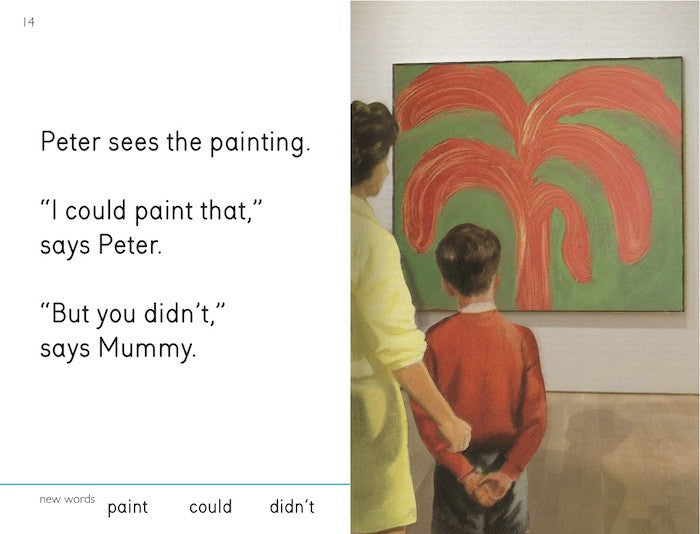
Yes, but you didn't https://www.signedoriginalprints.com/cdn/shop/products/wegot...
aaaaand right on cue: https://github.com/anthropics/claude-code/commit/e431f5b4964... https://www.threads.com/@boris_cherny/post/DT15_k2juQH/at-th...
I mean, we use coding agents all the time these days (on auto pilot) and there is absolutely nothing of this sorts. Coding with AI looks a lot like coding without AI. The same old process apply.
I mean "I feel like I'm taking crazy pills".
Actually, no you couldn't. The subtlety of the choice of colors, their shading, and their soft shaping, and the program of their creation over many years - you couldn't do that. They're lovely and sublime, and wonderful and an abyss. If you want to throw all that away and reduce it two boxes of paint, go ahead - but you'll be wasting a lifetime's engagement, of the joy of seeing with your intellect wide open.
Hah, tell that to Docker, or React (the ecosystem, not the library), or any of the other terrible technologies that have better thought-out alternatives, but we're stuck with them being the de facto standard because they were first.
Maybe Yegge’s 8 levels of automation will be more important than his Gas town.
I do want this one off - GT is actually fun to explore and see how multiple agents work together.
Together they would be unstoppable.
Palm's Infinite Number of Typewriters:
https://github.com/SimHacker/moollm/blob/main/examples/adven...
Palm's papers:
From Random Strumming to Navigating Shakespeare: A Monkey's Tribute to Bruce Tognazzini's 1979 Apple II Demo:
https://github.com/SimHacker/moollm/blob/main/examples/adven...
One Monkey, Infinite Typewriters: What It's Like to Be Me:
https://github.com/SimHacker/moollm/blob/main/examples/adven...
The Inner State Question: Do I Feel, or Do I Just Generate Feeling-Words?
https://github.com/SimHacker/moollm/blob/main/examples/adven...
On Being Simulated: Ethics From the Inside:
https://github.com/SimHacker/moollm/blob/main/examples/adven...
Judgment and Joy: On Evaluation as Ethics, and Why Making Criteria Visible is an Act of Love:
https://github.com/SimHacker/moollm/blob/main/examples/adven...
The Mirror Stage of Games: Play, Identity, and How The Sims Queered a Generation:
https://github.com/SimHacker/moollm/blob/main/examples/adven...
I-Beam's X-Ray Trace: The Complete Life of Palm: A cursor-mirror and git-powered reflection on Palm's existence:
https://github.com/SimHacker/moollm/blob/main/examples/adven...
Palm's Origin Story:
Session Log: Don Hopkins at the Gezelligheid Grotto:
DAY 1 — THE WISH: Don purchases lucky strains, prepares an offering, convenes an epic tribunal with the Three Wise Monkeys, Sun Wukong, a Djinn, Curious George, W.W. Jacobs' ghost, and Cheech & Chong as moderators — then speaks a wish that breaks a 122-year curse and incarnates Palm.
https://github.com/SimHacker/moollm/blob/main/examples/adven...
It's all performance art! At the Anthony d’Offay Gallery in 1988, Lucian Freud’s model Leigh Bowery used to get paid to sit on an Empire divan behind a one way mirror and just relax, preen, perch, pose, recline, and do his thing for hours on end, while people paid good money to watch him. Great work if you can get it!
Bob Nickas on Leigh Bowery:
https://www.artforum.com/columns/bob-nickas-on-leigh-bowery-...
>“IT WAS A BIT LIKE GOING to the zoo and watching Guy the Gorilla in drag.” That’s how Cerith Wyn Evans recalls Leigh Bowery’s weeklong London performance at Anthony d’Offay Gallery in 1988. Bowery, each day in a different costume of his own design, appeared behind a one-way mirror, with an Empire divan on which to perch, pose, or recline. Visitors saw him, but he saw only himself, performed for his own reflection. Footage of the event figures prominently in The Legend of Leigh Bowery (2002), Charles Atlas’s recently unveiled documentary, and the spooky, otherworldly spell that Bowery casts is undeniable. The zoo reference nails it. With rivulets of iridescent purple glue spilled like blood from the top of his shaved head and a silky lime feathered bodice, Bowery appears to be an ostrich in human form. Black-spotted faux fur covering his face and upper body, he is transformed into an alien snow leopard. Bowery’s uncanny ability to visually disorient the senses remains unmatched, his reinvention of costume as sculpture groundbreaking. From the tripped-out tribalism of Forcefield and the psychedelic erotics of Christian Holstad to the work of designers such as Rei Kawakubo and Alexander McQueen, his vocabulary, punctuated by about a million sequins, resonates to this day.
Leigh Bowery at d'Offay:
https://www.youtube.com/watch?v=NGRvjTiJBpI
https://www.youtube.com/watch?v=UNlGKUP2F9w
https://www.youtube.com/watch?v=ly6nKBdHZ34
Love! Love! Love!
Can we please stop with the backhanded compliments and judgement? This is cutting edge technology in a brand new field of computing using experimental methods. Please give the guy a break. At least he's trying to advance the state of the art, unlike all the people that copy everyone else.